When a loved one is cremated, you are left with a profound question: what do you do with their ashes? There is no single right answer, and you do not have to decide quickly. Cremated remains can be kept safely for as long as you need to think it through — and many families choose more than one option, keeping a portion at home while doing something else with the rest. This guide offers 25 genuine, meaningful ideas, grouped to help you find the approach that fits your family.
A Word Before You Begin
Choosing what to do with cremation ashes is a decision that deserves time and thoughtfulness. You may feel pressure — from logistics, from family members with different ideas, or simply from a desire to do the right thing — but there is no deadline. The ashes will keep safely, and a choice made after reflection will feel more right than one made in haste.
It is also worth knowing that you do not have to choose just one thing. Cremated remains can be divided. One portion might stay home in an urn; a small amount might go to cremation jewelry for a sibling; the rest might be scattered at a meaningful place. This kind of thoughtful division is very common, and it allows different family members to honor the same person in ways that are meaningful to each of them.
Keep at Home in an Urn
1. A Full-Size Cremation Urn for the Mantle or Shelf
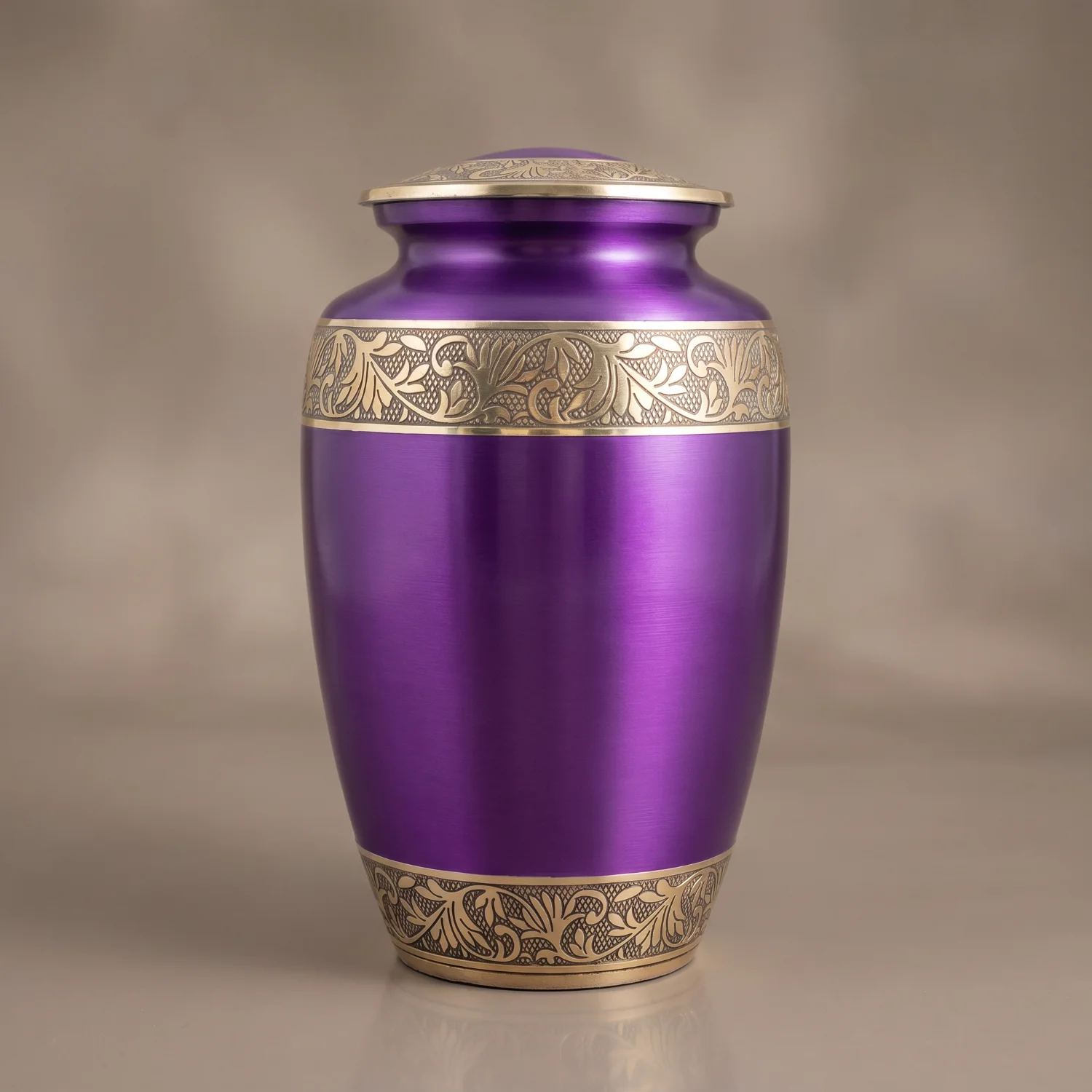
The most enduring choice for many families is placing the ashes in a cremation urn kept at home. This allows your loved one to remain part of everyday life — present in the rooms where the family gathers, visible during quiet mornings and busy evenings alike.
Urns come in an extraordinary range of materials and styles: hand-turned wood, hand-painted ceramic, brushed metal, sculpted resin. Choosing one that feels like a genuine reflection of the person — their warmth, their character, their sense of beauty — transforms the urn from a container into a portrait.
2. A Personalized or Engraved Urn
A standard urn becomes something far more personal when it carries a name, dates, and perhaps a brief phrase. “Beloved mother, always in our hearts” or simply a name and two dates — sometimes the simplest engraving is the most powerful. Personalization ensures the urn is unmistakably a tribute to a specific, irreplaceable person.
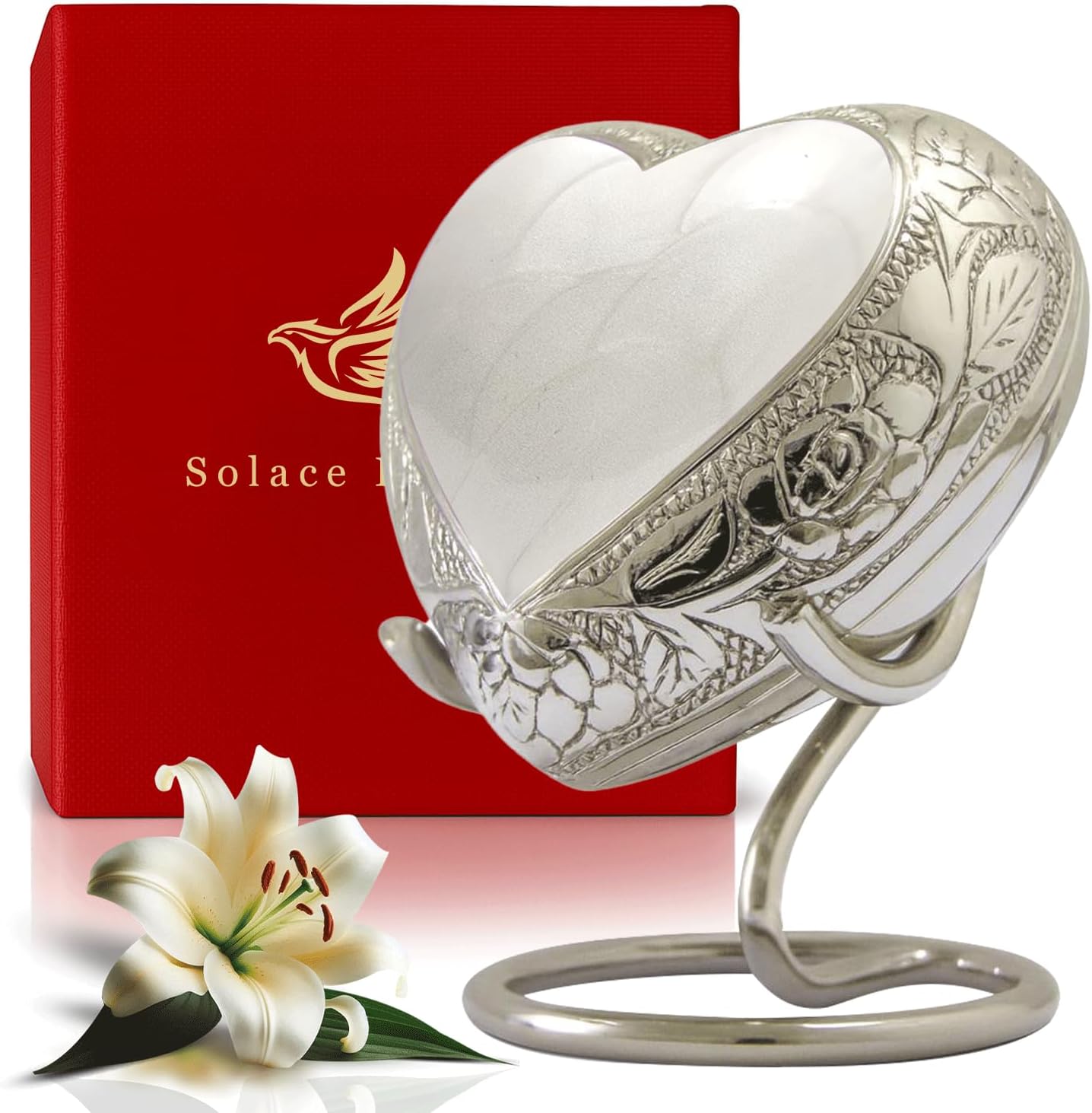
3. A Heart-Shaped Urn
A heart urn makes an explicit statement about the nature of the relationship. The shape itself communicates love without a word needing to be said. Heart urns are available in sizes appropriate for full ashes or as keepsakes, and they suit a bedroom, a windowsill, or any personal space.
4. A Display Urn With a Photo Frame or Companion Box
Some urns are designed alongside a photo frame or keepsake compartment, so a photograph of your loved one rests beside or becomes part of the memorial. Having the person’s face visible alongside the urn brings the memorial to life in a particular way — it is them, not just an object.
Share Among Family With Keepsakes
5. Keepsake Urns for Multiple Family Members
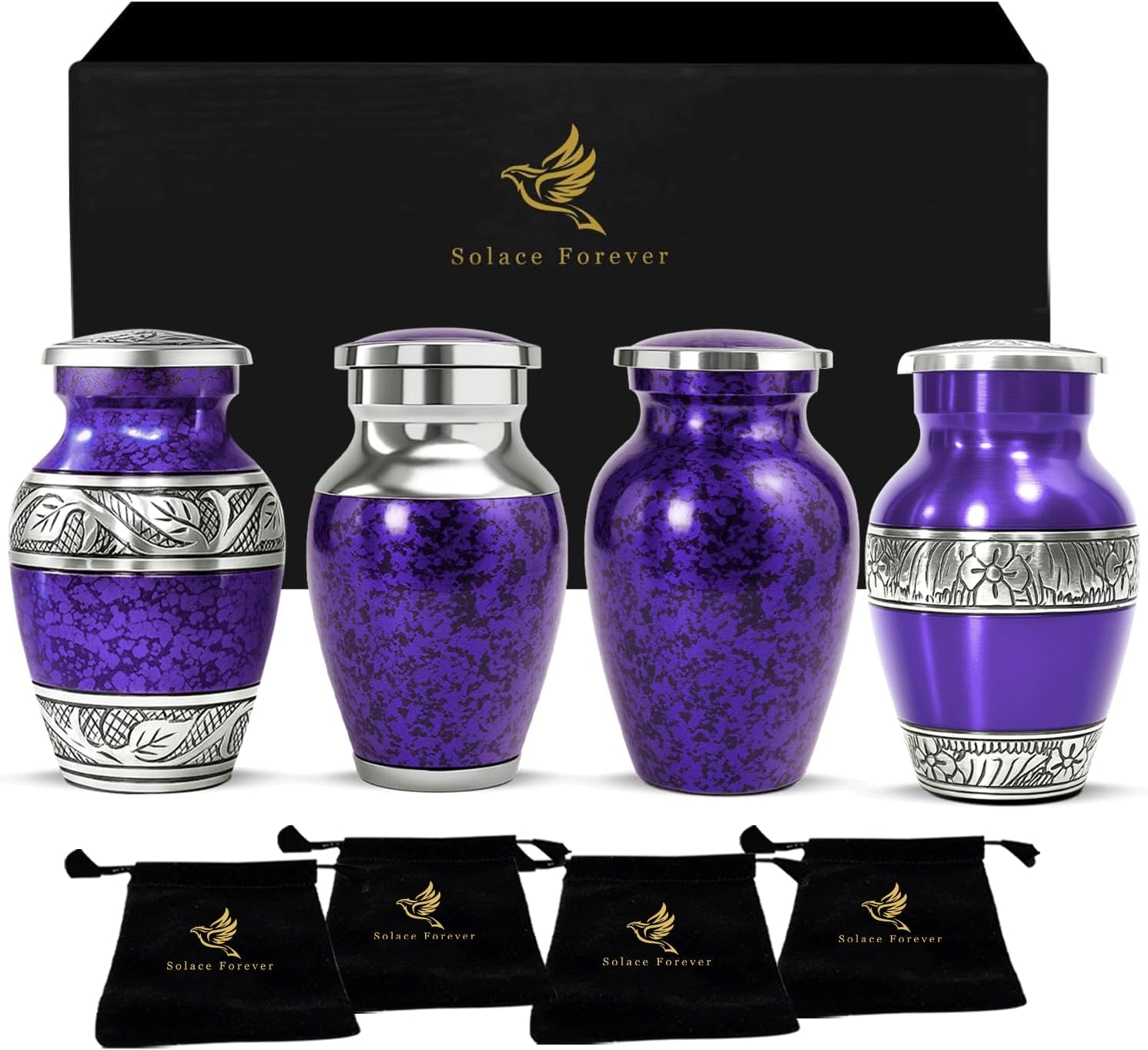
When a loss is shared by many people — children, grandchildren, siblings, a spouse — it can feel natural to want to share the ashes as well. Keepsake urns hold a small portion of the cremated remains and are designed to sit comfortably on a nightstand, a bookshelf, or a desk. Multiple family members can each have one, making the memorial something carried individually rather than tethered to a single location.
6. A Divided Memorial Set
Some families choose a matched set — a larger primary urn for the home, accompanied by two or three smaller keepsake urns of the same design, so the tribute feels unified even when distributed across different households.
7. A Keepsake for a Child or Grandchild
Children and grandchildren grieve too, and having their own small, age-appropriate keepsake — something beautiful that is theirs alone — can give them a concrete way to hold the person they lost. This is especially meaningful for a grandchild who may not have daily access to the primary memorial in another household.
Wear in Cremation Jewelry
8. A Cremation Pendant
Cremation jewelry — a pendant, locket, or charm containing a small amount of ash — allows you to carry your loved one with you every single day. This option resonates deeply with people who find comfort in physical closeness. The jewelry itself is often beautiful enough to wear without explanation: a simple teardrop, a delicate sphere, an elegant bar.
9. A Ring or Bracelet With Ashes
For those who prefer jewelry worn on the wrist or hand, cremation bracelets and rings are crafted to hold a small amount of ashes in a sealed chamber or worked into the material itself. They can be worn daily as a quiet, private act of remembrance.
10. Memorial Glass or Resin Jewelry
A specialized memorial jeweler can fuse a small amount of ash into hand-blown glass or clear resin, creating a pendant that is truly unique — a swirl of color containing something irreplaceable. Each piece is one-of-a-kind.
Scatter
11. Scatter at a Meaningful Place on Land
Scattering ashes at a place your loved one cherished — a mountain trail, a garden, a family farm, a quiet hillside — is one of the oldest and most instinctive memorial acts. In most cases, scattering on private land with the landowner’s permission is straightforward. For public land, including national parks and state parks, regulations vary; check in advance, as some areas require permits or have designated scattering zones. City or suburban public parks often have their own rules.
12. Scatter at Sea
Scattering ashes at sea is a long-standing tradition. In the United States, federal guidelines generally permit scattering in ocean water beyond a certain distance from shore. Many coastal areas have companies that offer dedicated scattering services, sometimes aboard a boat, sometimes via a water-soluble scattering urn released from the surface. This can become a meaningful ceremony for a family gathered on the water.
13. Aerial Scattering
Some companies offer aerial scattering services, releasing ashes from a small aircraft over a location of significance. This option appeals to families whose loved one had a connection to flying, to wide-open landscapes, or simply to the idea of freedom and expansiveness.
14. A Scattering Ceremony With Ritual
Whether at sea, on land, or in a garden, scattering can become a formal ceremony — with readings, music, flowers scattered alongside the ashes, or simply words spoken aloud by those who loved the person. Giving the act of scattering a ritual frame honors both the action and the life it commemorates.
Bury
15. Bury at a Cemetery or Memorial Garden
Many cemeteries and memorial gardens accept cremated remains for burial, either in a dedicated columbarium niche, a cremation plot, or a shared garden space. This gives the family a defined, permanent location to visit — a place to bring flowers, to sit, to mark anniversaries. If a family already has a plot, some cemeteries allow ashes to be interred with or near a previously buried family member; check with the specific cemetery for their policies.
16. Home Burial on Private Property
In many parts of the United States, burying cremated remains on private property is permitted, though local ordinances vary and it is worth confirming what applies in your area. A home burial in a garden or on a family property can create a permanent, meaningful place of remembrance tied to a space the family already loves.
Plant With a Living Memorial
17. A Biodegradable or Tree Urn
A biodegradable urn is designed to be buried with a tree seedling or plantable material, allowing the nutrients from the ash to nurture new growth over time. Watching a tree grow year after year — offering shade, changing with the seasons, eventually becoming large — can be a profound ongoing comfort. Some families plant the tree in a garden; others choose a property with long-term meaning.
18. A Memorial Garden Planting
Even without a specialized biodegradable urn, mixing a small amount of ash into soil at the base of a newly planted rosebush, perennial, or small tree is a meaningful act. A corner of the garden can become a dedicated memorial space — beautiful, living, and visited through every season.
Turn Into Something New
19. Memorial Diamonds
Specialized companies use heat and pressure to transform a portion of cremated ash into a lab-grown diamond, which can then be cut and set in jewelry. The process takes some months and carries a significant cost, but for families drawn to the idea of transforming grief into something enduring and beautiful, this option carries deep symbolic weight. Each stone is unique and verifiably created from the remains of that specific person.
20. Memorial Glass Art
Glass artists can incorporate ash into hand-blown glass — paperweights, orbs, pendants, decorative pieces. The resulting objects are luminous, one-of-a-kind, and quietly display the presence of someone within their beauty. This can be a meaningful option for families with an artistic sensibility, or for someone whose loved one particularly appreciated beauty and craft.
21. Incorporated Into a Painting or Artwork
Some artists will incorporate a small amount of ash directly into a painted portrait or abstract work. The painting becomes both art and memorial — something hung on the wall that carries the person within it in a literal sense. Commissioned memorial art has a long tradition; this is a contemporary version of it.
22. Pressed Into a Memorial Vinyl Record
For music lovers, some companies will press a small amount of ash into a playable vinyl record — which can include recorded music, a voice recording, or simply a meaningful album. Playing the record becomes a ritual act of remembrance.
Water, Air, and Space Options
23. A Water-Soluble Urn for a River or Lake
If a meaningful body of water is not the ocean but a beloved lake, river, or waterway, water-soluble urns are designed to dissolve gently on the surface, releasing ashes gradually. Check local regulations, as rules about releasing ash into inland waterways vary by state and locality.
24. A Reef Memorial
Companies that create artificial marine reefs can incorporate cremated remains into a reef structure placed in the ocean. Over time, the reef becomes a living habitat — corals and sea life grow on and around it. For families connected to the ocean, to marine conservation, or whose loved one was a diver or swimmer, this option carries a particular rightness.
25. A Space Memorial
A small number of companies offer services that send a portion of cremated ash into space — either into Earth orbit, to the surface of the moon, or on a deep-space trajectory. The symbolic weight of this option is considerable: a loved one whose life reached beyond ordinary limits, or who simply loved the stars, becoming part of the cosmos. These services range considerably in cost and scope, and it is worth researching providers carefully.
General Notes on Legal Considerations and Permissions
Regulations around cremated remains vary considerably depending on where you live and what you plan to do. A few general principles:
- Private land burial is permitted in many US states but regulated at the local level. Check with your county or municipality before burying ashes at home.
- Scattering on public land — national parks, state parks, public beaches — typically requires checking with the managing agency. Some areas have designated scattering zones; others require a permit.
- Scattering at sea is generally governed by federal EPA guidelines, which allow it in ocean waters beyond a certain distance from shore; check the current guidelines for specifics.
- Cemetery and columbarium burial will be governed by that specific institution’s rules, which vary.
- International travel with ashes requires documentation; if you plan to carry or send ashes abroad, work with your funeral provider to ensure you have the proper paperwork.
When in doubt, a licensed funeral director can guide you through the relevant regulations for your specific situation.
Keeping a Portion While Doing Something Else
One of the most freeing things to understand is that these options are not mutually exclusive. You can:
- Keep the majority of ashes in a home urn and place a small amount in cremation jewelry.
- Scatter most of the ashes at a meaningful location while retaining a keepsake portion.
- Divide ashes among family members in keepsake urns so that multiple households each have a portion.
- Bury a portion at a cemetery and keep a portion at home.
There is no rule requiring ashes to remain together or in one place. Dividing them thoughtfully — with intention and care — allows different forms of remembrance to coexist, and it honors the fact that a person who mattered deeply was loved by many people in many different ways.
If you are navigating a divided family where different members have strong preferences, it may help to acknowledge that each person’s instinct is coming from love, and that finding a way to honor multiple approaches is often possible.
Taking Your Time
You do not have to decide immediately. You do not have to decide at all until it feels right. Cremated remains can be kept safely for an extended period of time, and many families find that what feels right in the first weeks of grief is not the same as what feels right six months later.
Give yourself permission to sit with your options. Look through our collection of cremation urns and keepsake urns when you are ready. And know that whatever you ultimately choose — simple or elaborate, traditional or unconventional — the love behind the decision is what will make it meaningful.
Frequently Asked Questions
Can I split cremation ashes among different options?
Yes, and many families do. There is no requirement that cremated remains be kept in one place or used in only one way. A common approach is to keep the majority in a home urn while placing a small portion in cremation jewelry or a keepsake urn for another family member. As long as you handle the division with care and dignity, dividing the ashes is entirely appropriate.
Do I need a permit to scatter ashes?
It depends on where you plan to scatter. On private land with the owner’s permission, typically no permit is needed in most US states. Ocean scattering is generally governed by federal guidelines. National and state parks, public beaches, and other managed public lands each have their own rules — check with the managing agency before scattering. A funeral director can point you toward the relevant regulations for your area.
How long can I keep cremated remains at home before I have to do something with them?
There is no legal time limit in the United States for keeping cremated remains at home. You can take as long as you need. Many families keep an urn at home indefinitely and find ongoing comfort in it.
Is it disrespectful to divide ashes among family members?
Not at all. Dividing ashes so that multiple people can keep a portion close is a widely practiced and deeply meaningful choice. It recognizes that a person was loved by many, and that each relationship deserves its own form of remembrance. As long as the division is done with care and intention, it is a beautiful expression of shared love.
What is the most meaningful thing to do with cremation ashes?
The most meaningful choice is the one that genuinely honors your loved one and brings comfort to those who grieve them. For one family that might be a handcrafted urn on the mantle; for another it might be scattering ashes at a beloved fishing lake; for another it might be cremation jewelry worn every day. There is no hierarchy of options — only what is true and fitting for your particular person and your particular love.
Whatever you choose, you are choosing with love. That is the most important thing — and nothing can take it away.
Pieces families choose
Handcrafted, free US shipping, 30-day returns.